
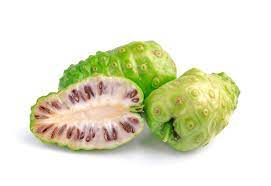
Morinda citrifolia contains active principles such as xeronine, which confer promising pharmacotherapeutic properties including antioxidants, analgesics, sedatives, and anticancer effects.
For centuries, different cultures around the world have utilized herbal and natural products as part of their traditional medicine. It is only in recent times that scientists and medical professionals have increased their interest in this field, recognizing the real health benefits they provide. Among these natural medicines are many that constitute both food and medicine, a concept that dates back to Hippocrates, the Father of Medicine, over two millennia ago, who advised, «Let food be thy medicine and medicine be thy food.»
An example of such assertion is tea, which has been known in China for over 4000 years for its ability to act as an antidote to other poisonous herbs. New beneficial medicinal properties are discovered daily, mirroring the historical trajectory of other plants with medicinal properties, such as Morinda citrifolia L, commonly known as Noni, whose benefits have been known and utilized for over 2000 years by the inhabitants of the Polynesian Islands.
The Polynesians used all parts of the plant for their remedies, as roots, stems, bark, leaves, flowers, and fruits of Noni, in different combinations, are part of almost 40 reported herbal remedies. Despite its practical origin being reported in Polynesia, the existence and medicinal and nutritional use of Morinda citrifolia L also spans across the Pacific Islands, Southeast Asia, Australian aborigines, and India. Its use in Tahiti is described by celebrities such as Captain James Cook of the British Navy in the late 18th century, and its leaves and fruits were recommended as emergency food by Merril in a Survival Manual for the American army during World War II in 1943.
Noni is traditionally used in the form of juice as a tonic, in poultices, and as tea. Tea is made from the leaves of the plant as a remedy for tuberculosis, arthritis, rheumatism, and aging. The leaves and bark are used to prepare a tonic for urinary and muscular problems or joint pain. The juice, which has an unpleasant taste and odor, is used on the scalp for lice removal, and the green fruit is macerated with salt and applied to deep wounds and broken bones, while the ripe fruit is used as a poultice for facial blemishes or as a remedy for skin irritation, boils, or infections.

 Happy life